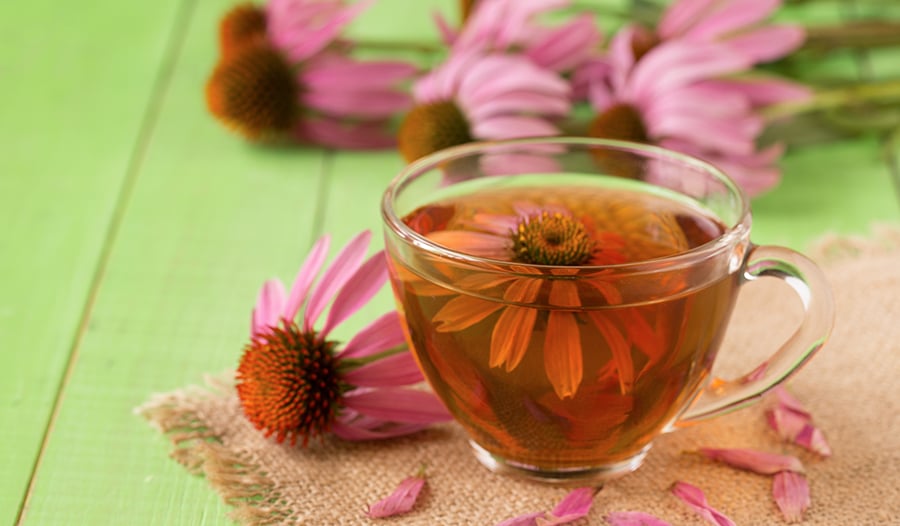
, is a wild plant of the Asteraceae family. In American Indian lore, Echinacea represents health and strength, and its floral language means boosting protection. Whether used internally or externally, Echinacea provides benefits to our bodies. The flowers, leaves and roots of Echinacea are widely used in traditional medicine and health care, and it is currently one of the top five selling health food products in Europe and the United States, and is also known as the "No. 1 herb in North America".
Research in 2009 showed that echinacea extract activates peroxisome proliferator-activated receptor (PPAR- ) to promote metabolism and maintain balance.
Modern people live a stressful and fast-paced life and are prone to tension. Echinacea extract contains alkanamide, rosemarinic acid and caffeic acid, which can help reduce anxiety; the same effect was also found in the experiments on mice, and Echinacea did not reduce the activity and activity level of mice.
High-risk groups that are prone to catching up with epidemics
Echinacea rarely causes allergic reactions. When you take echinacea by mouth, you may experience a strong numbness and tingling sensation on your tongue. This is normal and will go away quickly. The Herbal Products Association in the United States gives Echinacea a Class 1 safety rating. Therefore, as long as you take it as prescribed or as directed on the label, you are relatively safe. In Germany, continuous use of echinacea is limited to eight weeks. If you want to take it for a long period of time you have to consult your doctor.